
Known for their melodic, high-pitched bay, Billy dogs are more than just charming hounds—they are spirited companions with a rich history and a keen hunting instinct. Energetic, intelligent, and surprisingly easy to train, these French scent hounds have captured the hearts of dog lovers worldwide. Dive into the world of Billy dogs to explore their origins, personality traits, and the care they need to thrive.
History of the Billy Dog
The Billy dog is a distinguished large scenthound that traces its origins to the 19th century in west-central France. It was developed by Monsieur Gaston Hublot de Rivault, who named the breed after his estate, Château de Billy, located in the Poitou region. De Rivault’s goal was to create a versatile and powerful hunting dog capable of tracking large game, such as deer and wild boar, in packs.
To achieve this, de Rivault combined several ancestral breeds, including the Poitevin, Montemboeuf, and Ceris hounds. Each of these lines contributed distinct qualities to the Billy: the Poitevin added stamina and refined scenting abilities, while the Montemboeuf and Ceris lines contributed lighter coloration and agility. Coloration was a particularly important factor for de Rivault, who preferred pale, elegant coats that distinguished the Billy from other hunting breeds.

Despite its early success, the Billy faced significant challenges during the early 20th century. By 1927, many hunting packs had been dispersed, and the breed’s numbers dwindled. The two World Wars further threatened the breed’s survival, with reports indicating that only two hounds survived World War II. Recognizing the need to preserve this unique breed, Anthony de Rivault, Gaston’s son, undertook careful revival efforts. He crossed the surviving Billys with other French hounds, including the Porcelaine, Harrier, and remaining Poitevin stock, restoring both the numbers and the defining characteristics of the breed.
The Billy dog also played an influential role in the development of other French hunting breeds. Notably, it was one of the foundational breeds used in creating the Grand Anglo-Français Blanc et Orange, known in English as the Great Anglo-French White and Orange Hound, which inherited the Billy’s exceptional endurance, pack hunting skills, and elegant appearance.
Today, the Billy remains a rare breed, with packs still maintained in its native France for traditional hunting purposes. Its contributions to French hunting hounds have been formally recognized by major kennel clubs. The United Kennel Club (UKC) officially recognized the Billy in 1996, and the Fédération Cynologique Internationale (FCI) includes it in their scenthound standards. While it remains uncommon outside France, the Billy’s legacy endures through both its continued use in hunting and its influence on other European hound breeds.
Physical Characteristics
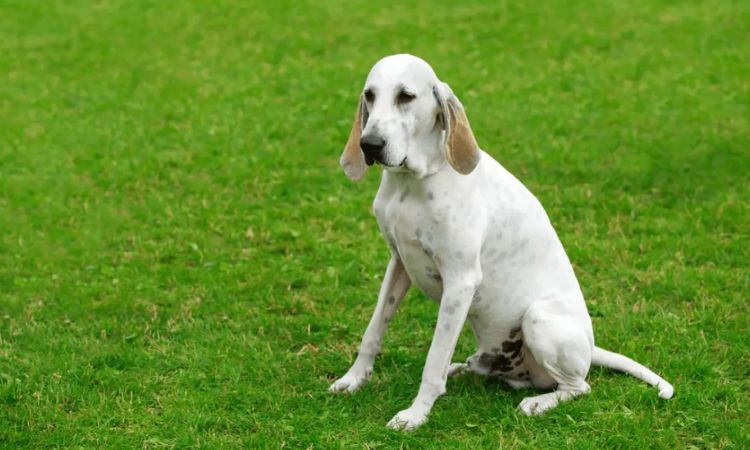
The Billy dog is a large, athletic scenthound known for its combination of strength, agility, and elegance. Males typically stand between 23.5 and 27.5 inches (60–70 cm) at the shoulder, while females range from 22.5 to 24.5 inches (58–62 cm). Their weight varies from 52 to 70 pounds (23–32 kg), giving them a sturdy yet light build that allows them to move swiftly over rugged terrain. The overall structure is well-proportioned, with a deep chest, strong back, and slightly arched loin, which contributes to their endurance and balance during long hunts.
The coat of the Billy is short, smooth, and somewhat harsh to the touch, providing protection without hindering mobility. The primary coat color is white or off-white, occasionally showing patches or mantles of orange, lemon, or light tan. Black or red hair is considered a disqualification in breed standards. The Billy’s coat requires minimal grooming, though regular ear cleaning is essential due to their long, medium-set ears, which are prone to infections.
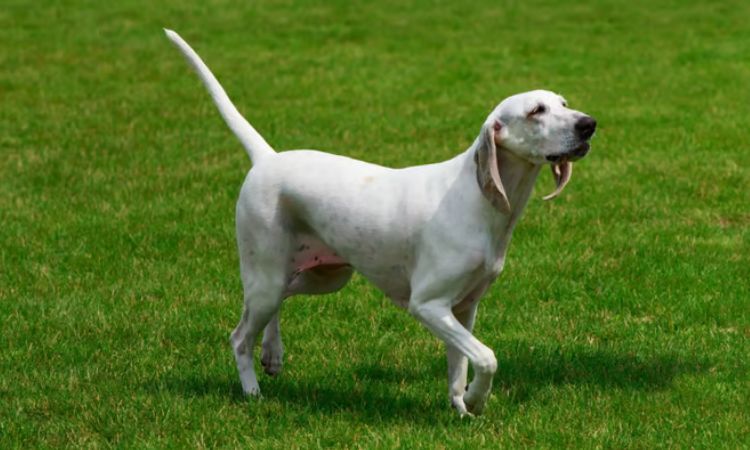
Distinctive features include a moderately long, square muzzle with lips that cover the lower jaw without pendulous sagging. The nose can be black or reddish-brown, complementing the alert, dark eyes that convey intelligence and focus. The ears are set high and relatively flat, with slightly inward-turning tips, while the long tail is strong, sometimes slightly feathered, and carried gracefully.
Breed standards also highlight the Billy’s gait: it should gallop easily with a fluid, effortless stride, reflecting its capacity for endurance hunting. The skull is slightly domed with a well-defined stop, and the teeth are evenly spaced in a scissor bite, with a slight overshot acceptable. Forelegs are strong and straight, supporting a deep, narrow chest, while hindquarters are moderately muscled with well-formed hocks, enabling powerful propulsion. The feet are round and compact with tight toes, designed for stability on uneven terrain.
The Billy’s physical characteristics are not merely aesthetic; they are functional, shaped by centuries of selective breeding for pack hunting of large game such as deer and wild boar. Every aspect—from the deep chest to the powerful, straight forelegs and alert expression—is a reflection of a breed designed for speed, endurance, and coordination within a hunting pack.
Temperament and Personality
The Billy dog is a highly intelligent, energetic, and instinct-driven breed, developed primarily for pack hunting in the French countryside. Their temperament reflects both their historical purpose and their strong bonds with humans.
Intelligence, Hunting Instincts, and Energy Levels
- Billy dogs are exceptionally intelligent and quick learners, particularly when it comes to tracking and hunting.
- Bred as scenthounds, they possess an acute sense of smell and can adjust the intensity and volume of their vocalizations depending on the prey they are tracking.
- They are extremely energetic, requiring daily physical exercise such as long walks, runs, or play in open spaces to remain healthy and well-balanced.
- Their independent nature, shaped by generations of hunting in packs, can sometimes appear as stubbornness, making consistent training essential.
Behavior with Families, Children, and Other Pets
- Billys form strong, loyal bonds with their families and are affectionate and protective toward children. They tend to be gentle, patient, and attentive companions in family settings.
- Their sociable nature allows them to get along with other dogs when properly socialized.
- Due to their strong prey drive, Billys may instinctively hunt smaller animals such as cats, rabbits, or rodents if not raised with them from a young age. Early socialization and supervision are key for multi-pet households.
Trainability and Leadership Needs
- Billys respond best to firm, consistent, and patient training methods. Repetition and clear rules are necessary due to their natural independence.
- They thrive under confident leadership; providing structure helps channel their hunting instincts into productive behaviors and prevents problem behaviors from emerging.
- Positive reinforcement, such as praise and rewards, works best, while harsh methods can lead to resistance or anxiety.
Vocal Tendencies and Loyalty
- Billys are naturally vocal dogs, using howls, barks, and baying to communicate both during hunts and in daily life. Their vocalizations can serve as alerts or expressions of excitement and engagement.
- They are highly loyal and form deep attachments to their owners, often seeking to remain close and protective.
- When well-socialized, Billys balance their vocal alertness with affectionate, playful, and loving interactions with family members.
Care Needs and Lifestyle

Exercise Requirements and Best Living Environment
The Billy is a high-energy hunting breed that thrives on consistent physical activity and mental stimulation. These dogs were historically bred to hunt in packs across expansive terrains, which means they require ample space to run, explore, and engage in natural scent-driven behaviors. Daily exercise is essential to prevent boredom and behavioral issues, including long walks, jogging, and play sessions that challenge their intelligence. Mental stimulation, such as scent games or obedience training exercises, is equally important to keep them engaged and happy. Ideally, the Billy should live in a home environment where it has access to open spaces, such as a large yard or countryside setting, where it can safely roam and release its energy.
Suitability for Home Types (Yard vs. Apartment)
Billys are not well-suited for apartment living due to their size, stamina, and exercise needs. While they can adapt to urban life if given regular outdoor activities, homes with a yard or access to safe open spaces are optimal for their health and happiness. The breed flourishes in suburban or rural environments where it can explore, hunt, and engage in play without restriction. Lack of space and insufficient activity in confined living situations can lead to restlessness and destructive behaviors.
Grooming and Maintenance
One of the advantages of owning a Billy is its relatively low-maintenance coat. The short, smooth, and slightly harsh fur requires minimal grooming. Regular brushing helps remove loose hairs and keeps the coat healthy, while occasional bathing is sufficient for hygiene. Owners should pay special attention to the ears, which are long and droopy, making them susceptible to infections. Routine ear cleaning, nail trimming, and dental care are essential components of the Billy’s grooming regimen to maintain overall health and comfort.
Diet and Nutrition
A well-balanced diet is critical for supporting the Billy’s high energy levels and maintaining its muscular build. These dogs benefit from high-quality commercial dog foods formulated for medium to large, active breeds, or a carefully managed raw or home-cooked diet recommended by a veterinarian. Protein-rich meals, supplemented with essential vitamins and minerals, help maintain strong muscles and joint health. Portion control is important to prevent overfeeding, especially for less active dogs, as excess weight can strain joints and reduce mobility. Fresh water should always be available to keep them hydrated, particularly after exercise.
Common Health Issues and Lifespan
Billys are generally a robust and healthy breed, but like many medium to large dogs, they can be prone to specific health concerns. Common issues include:
- Hip and elbow dysplasia: Regular veterinary checks and maintaining a healthy weight can mitigate risks.
- Ear infections: Due to their long, drooping ears, regular inspection and cleaning are necessary to prevent bacterial buildup.
- Occasional joint and mobility concerns: Proper exercise, diet, and preventive care help reduce long-term issues.
With appropriate care, exercise, and veterinary oversight, the Billy has a lifespan of approximately 10 to 15 years, offering owners over a decade of loyal companionship and active participation in family life.
Training Tips and Socialization
Training Methods Suitable for the Billy Dog
The Billy is an intelligent and independent scenthound, which means training requires patience, consistency, and positive reinforcement. These dogs respond best to reward-based training methods that combine treats, praise, and play. Due to their hunting background, Billys can be easily distracted by scents and environmental stimuli, so short, frequent training sessions that gradually build focus are ideal. Repetition is key: commands and behavioral expectations must be consistently reinforced to instill long-lasting habits. While they are eager to please, Billys may exhibit stubbornness, so using gentle guidance rather than harsh corrections yields better results. Early training is highly recommended, beginning in puppyhood to establish boundaries, basic obedience, and good manners.
Socialization with People, Pets, and Unfamiliar Environments
Socialization is a critical aspect of raising a well-rounded Billy. Exposing them to a variety of people, children, other dogs, and animals from a young age helps prevent shyness, overexcitement, or reactivity in unfamiliar situations. Billys generally enjoy companionship and can form strong bonds with their families, but their history as hunting pack dogs means they thrive on interaction with other dogs. Introducing them gradually to different environments—parks, urban areas, or new homes—ensures they remain confident and adaptable. Positive experiences during socialization help reduce anxiety and promote friendly, sociable behavior around strangers and other animals.
Addressing Prey Drive and Leadership
Given their origin as pack hunting dogs, Billys have a strong prey drive and may instinctively pursue smaller animals. Owners should remain vigilant around small pets such as cats, rabbits, or birds, particularly if the Billy has not been raised with them from a young age. Controlled exposure, supervision, and reinforcement of recall commands are essential for managing this instinct safely.
Establishing clear leadership is vital for a Billy’s training and overall well-being. These dogs respect consistent and confident guidance from their owners. A structured environment with clear rules helps them understand boundaries and fosters mutual respect. Owners who can balance firmness with kindness will find that Billys respond with loyalty, cooperation, and affection.